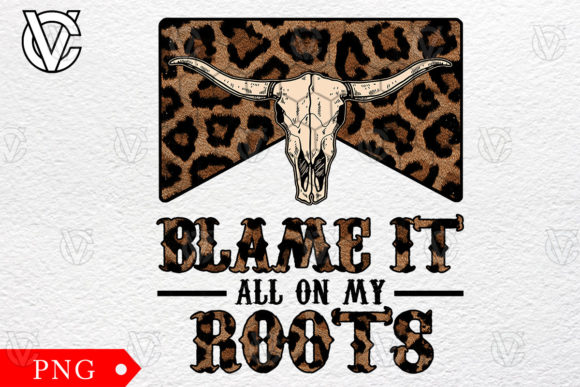
Blame It All on My Roots Cowhide Cowboy
When I sit down to review a new digital asset for my embroidery workflow, I am rarely looking for just another pretty picture. As a designer who turns pixels into stitched reality, I am looking for structural integrity, visual clarity, and market viability. Today, I am evaluating Blame It All on My Roots Cowhide Cowboy, a design that promises a distinct rustic aesthetic. This is a digital item provided as a ZIP file containing a single transparent background PNG at 4500×5400 pixels. It falls under the categories of Print Templates and Graphics, which immediately signals that this is likely intended for sublimation or large-format printing rather than direct machine stitching, though its visual language borrows heavily from traditional embroidery project motifs.
First Impressions: The Visual Personality
The moment you open the preview of Blame It All on My Roots Cowhide Cowboy, the mood is established instantly. It feels grounded, nostalgic, and undeniably Texan. The "cowhide" aspect suggests a texture-heavy composition, likely utilizing irregular shapes and high-contrast patterns that mimic the natural variation of leather. For an Etsy seller or small business owner, this is crucial because texture sells. In the world of handmade goods, customers are often seeking items that feel authentic and tactile, even if they are viewing them on a screen.
The layout appears bold enough to stand alone on a garment without needing excessive surrounding text or graphics. This is a significant advantage. Many modern designs suffer from clutter, forcing the viewer to hunt for the focal point. Here, the cowboy theme provides a clear narrative anchor. Whether it features a silhouette, a hat, or a stylized animal, the composition commands attention. It creates a sense of rugged individualism that resonates strongly with specific demographics, particularly those interested in western wear, country living, or heritage aesthetics.
Real-World Application: From Screen to Stitched Reality
To truly judge this asset, we must imagine it in use. Let us consider a scenario where I am preparing inventory for a upcoming craft fair. I have a stack of heavyweight cotton canvas tote bag design options ready for decoration. I place Blame It All on My Roots Cowhide Cowboy centrally on the bag. The contrast between the cowhide pattern and the neutral canvas would create a striking visual pop. However, because this is a print template rather than a native machine embroidery design, I would likely use this for DTG (Direct-to-Garment) printing or heat transfer vinyl application on the tote, rather than threading a hoop.
If I were adapting this concept for actual custom apparel, such as a denim jacket or a flannel shirt, the design’s strength lies in its ability to serve as a statement piece. Imagine this printed on a black sweatshirt; the white or light tones of the cowhide would gleam against the dark fabric. Alternatively, on a cream-colored baby onesie, it could offer a charming, gender-neutral option for parents who appreciate western themes. The versatility here is high, provided the resolution holds up during scaling.
For the commercial embroidery sector, this graphic could inspire custom patch designs. A local boutique might commission a manufacturer to recreate the cowhide elements using applique techniques, combining different shades of brown and tan felt to mimic the print. This elevates the product from a mass-produced novelty to a high-end handmade product with perceived value. The design acts as a blueprint for craftsmanship, guiding the eye toward quality materials.
Where Caution Is Required
While the aesthetic is strong, practical application demands scrutiny. If you are attempting to translate this visual style into actual stitch density via digitizing, you face challenges. Cowhide patterns are inherently complex. Trying to replicate organic spots and textures with thread can result in a muddy appearance if the stitch density is too high. Conversely, if the density is too low, the design may look sparse and lose its impact. I advise testing any digitized version on scrap fabric first to ensure the details remain crisp.
Fabric choice is equally critical. On thin or stretchy fabrics, the weight of any associated embellishments or prints might cause distortion. Similarly, on textured fabrics like heavy wool or boucle, the fine details of the cowhide pattern might get lost. You need a smooth surface—like jersey, cotton, or synthetic blends—to let the design breathe. Also, consider the placement. Curved surfaces like caps or hats require careful mapping to prevent warping. A flat panel on a backpack or a straight section of an apron is far more forgiving.
Impact on Brand and Customer Trust
In the digital marketplace, your product images are your storefront. Using a high-resolution asset like this 4500×5400 pixel PNG allows you to create professional printable mockup images. When an Etsy seller presents a clean, sharp image of their small shop product, it builds immediate trust. Buyers assume that if the digital presentation is polished, the physical product will be too. Blame It All on My Roots Cowhide Cowboy offers that polish.
This design also speaks to brand consistency. If your shop specializes in rustic, vintage, or western-themed goods, having a cohesive library of assets like this helps reinforce your identity. Customers return to brands they recognize. When they see the cowhide motif again, they associate it with the quality and style they previously enjoyed. This recognition drives repeat purchases and word-of-mouth referrals. Furthermore, as a personalized gift idea, this theme works exceptionally well for holidays, birthdays, or retirement gifts for someone who loves the outdoors. The emotional connection to "roots" and "home" adds sentimental value beyond the physical item.
Practical Designer Notes for Implementation
Before committing this asset to production, there are several technical checks every serious maker should perform:
- Test on Scrap Fabric: Always run a test print or stitch-out on the exact material you plan to sell. Colors shift, and textures interact differently than expected.
- Check Thread Color Contrast: If using this as inspiration for thread work, ensure the chosen thread colors provide sufficient contrast against the base fabric. Low contrast leads to designs that disappear.
- Review Stitch Density: If digitizing, avoid overloading the design. Too many stitches can pucker the fabric, ruining the drape of custom apparel.
- Confirm Hoop Size: Ensure the final dimensions fit within your machine’s standard hoops. Oversized designs may require multi-hooping, which introduces alignment risks.
- Inspect Small Details: Zoom in on the PNG. Are the edges of the cowhide pattern jagged or smooth? Crisp edges indicate a high-quality vector or raster source.
- Black and White Mockups: Convert the design to grayscale to check its value structure. If it loses definition in monochrome, it may lack the necessary visual weight for effective branding.
- Licensing Verification: Since this is a digital embroidery file or graphic asset, verify the commercial license terms. Can you sell unlimited finished products? Are there restrictions on resale platforms?
Ultimately, Blame It All on My Roots Cowhide Cowboy is a versatile and evocative asset. It captures a specific cultural aesthetic that remains popular in contemporary fashion and home decor. By understanding its strengths in visual appeal and its limitations in technical execution, designers and entrepreneurs can leverage this design to create compelling finished product offerings. Whether used as a primary graphic on a sweatshirt embroidery project or as a component in a larger design assets collection, it brings a touch of rugged elegance to any craft business portfolio. Just remember: good design starts with preparation. Test thoroughly, choose your materials wisely, and let the quality of your work speak for itself.